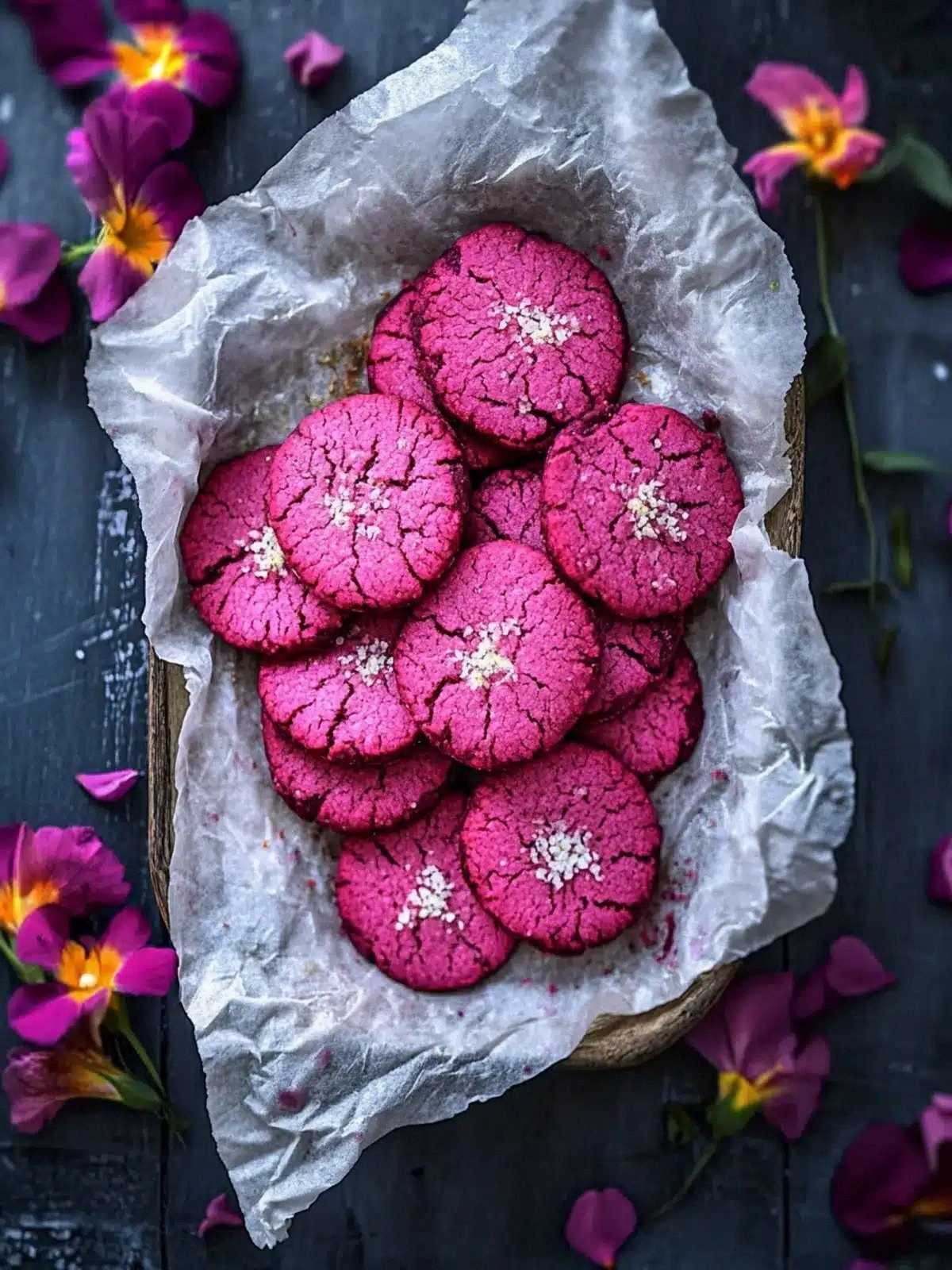
I was staring at a half‑baked batch of white chocolate cookies that had turned a sad, dull gray on the counter, when a neighbor’s voice crackled over the kitchen radio, “You need a little color in your life!” That was the spark that lit my culinary curiosity. I grabbed the nearest beetroot, the most vibrant crimson I could find, and the delicate scent of fresh rose water, and I thought, “Why not let these two stars collide?” The idea of pink cookies that taste like a garden in bloom sounded like a challenge worth accepting.
Picture this: a tray of glossy, pale pink dough, the faint scent of earth and floral notes mingling in the air, a soft hum of the oven preheating to 350°F. When you lift a cookie, the edges are crisp and the center remains a tender, almost custard‑like melt. The first bite is a burst of subtle sweetness, followed by a whisper of rose, then the earthy undertone of beet, all wrapped in a buttery texture that feels like a cloud. The sound of a cookie breaking apart is a satisfying crack that echoes the crunch of fresh garden crunch.
This recipe is a game‑changer because it turns a simple cookie into an edible piece of art. The beetroot puree gives an unexpected depth of flavor and a natural pink hue that no food dye can match. The rose water, used sparingly, elevates the sweetness into a floral bouquet, while the melted white chocolate adds a glossy finish that makes the cookies look like tiny, edible roses. The combination of these ingredients creates a cookie that is not only visually stunning but also complex in taste—sweet, earthy, floral, and buttery all at once.
I dare you to taste this and not go back for seconds. The moment you bite, you’ll feel the cookie’s texture shift from crisp to soft, like a gentle wave that leaves a lingering, fragrant aftertaste. If you’re still skeptical, remember that most recipes get this completely wrong: they either over‑bake, use too much sugar, or skip the beet entirely. Here’s what actually works. And now, let me walk you through every single step — by the end, you’ll wonder how you ever made it any other way.
What Makes This Version Stand Out
- Flavor Depth: The beetroot puree brings a subtle earthy sweetness that balances the rose’s floral notes, creating a flavor profile that feels both fresh and indulgent.
- Natural Color: No artificial dyes here—just pure beetroot pigment that gives a soft, blush pink that’s as eye‑pleasing as it is healthy.
- Texture Contrast: The butter and sugar ratio delivers a crisp edge with a chewy, almost melt‑in‑your‑mouth center.
- Visual Appeal: The finished cookies resemble miniature roses, making them perfect for special occasions or a dramatic dessert table.
- Make‑Ahead Friendly: Once baked, they keep their texture for up to a week when stored properly, making them ideal for parties.
- Ingredient Quality: Using fresh rose water and a high‑quality beet puree elevates the cookie from ordinary to extraordinary.
- Easy to Scale: The recipe’s proportions work perfectly whether you’re baking for a family or a crowd.
- Healthier Option: Beetroot adds fiber and antioxidants, while the rose water keeps the sugar levels moderate.
Alright, let's break down exactly what goes into this masterpiece...
Inside the Ingredient List
The Flavor Base
The all‑purpose flour is the foundation that holds everything together. It absorbs the liquid components and gives the cookies their structure. Skipping flour would leave you with a sticky mess that never sets. If you’re on a low‑carb diet, you can replace 25% of the flour with almond flour, but be aware that the cookies will be slightly denser.
The Texture Crew
Unsalted butter is the star that brings richness and a silky mouthfeel. The granulated sugar creates a sweet base that caramelizes slightly during baking, while the powdered sugar is added later to give the cookies a delicate finish and a soft, almost powdery dusting. If you’re looking for a lighter texture, reduce the butter by 10% and increase the granulated sugar slightly to maintain the balance.
The Unexpected Star
Beetroot puree is the secret sauce that gives the cookies their pink hue and a subtle earthy sweetness. Beetroot also adds natural moisture, which helps keep the cookies tender. If you can’t find fresh beetroot, you can use frozen beet puree, but make sure to thaw and squeeze out excess water to avoid a watery dough.
The Final Flourish
Rose water is the finishing touch that elevates the cookie’s aroma and flavor. Use it sparingly; too much can make the cookie taste medicinal. For an extra touch of elegance, drizzle melted white chocolate over the cooled cookies and sprinkle edible rose petals on top. If you prefer a sweeter finish, you can replace the white chocolate with dark chocolate for a richer bite.
Everything's prepped? Good. Let's get into the real action...
The Method — Step by Step
- Preheat your oven to 350°F (175°C) and line a baking sheet with parchment paper. While the oven heats, bring a small saucepan of water to a gentle boil. This step ensures the oven temperature stays consistent and prevents the cookies from drying out.
- In a large mixing bowl, sift together the flour and baking soda. Sifting removes lumps and aerates the flour, which helps the cookies rise slightly and stay light. This is where the structure of your cookie begins to form.
- Cut the butter into small cubes and add it to the flour mixture. Using a pastry cutter or your fingertips, cut the butter into the flour until the mixture resembles coarse crumbs. The butter should be cold but pliable; if it’s too soft, the dough will become greasy.
- In a separate bowl, whisk the egg and rose water together until fully blended. The rose water should be added slowly to avoid over‑whisking, which can cause the mixture to become too runny.
- Add the beetroot puree to the egg mixture, stirring until a uniform pink paste forms. The beetroot not only colors the dough but also adds moisture, so keep an eye on the consistency—if it’s too thick, add a teaspoon of water.
- Combine the wet and dry mixtures, folding gently with a spatula until just combined. Over‑mixing here can develop gluten and make the cookies tough. The dough should be sticky but manageable.
- Shape the dough into 1‑inch balls and place them on the prepared baking sheet, spacing them about 2 inches apart. Pat each ball slightly to flatten the top; this helps them bake evenly.
- Bake for 12–15 minutes, or until the edges are golden and the centers show a slight sheen. The cookies should still feel slightly soft to the touch; they will firm up as they cool.
- While the cookies are cooling, melt the white chocolate over a double boiler or in a microwave on low power, stirring every 20 seconds until smooth. This will be used to glaze the cookies.
- Once the cookies are cool, drizzle the melted white chocolate over each cookie with a small spoon or a piping bag. Sprinkle edible rose petals on top for an extra touch of elegance.
That's it — you did it. But hold on, I've got a few more tricks that'll take this to another level...
Insider Tricks for Flawless Results
The Temperature Rule Nobody Follows
Many bakers bake at 375°F, but that’s too hot for these cookies. Baking at 350°F ensures the edges brown evenly without drying out the center. If your oven runs hot, place a cooling rack in the middle to moderate the heat.
Why Your Nose Knows Best
Before you start, open a jar of rose water and inhale deeply. The aroma will remind you of the final flavor profile. If the scent feels off, it might mean the rose water is old; fresher water brings a brighter floral note.
The 5‑Minute Rest That Changes Everything
After mixing the dough, let it rest in the fridge for 15 minutes. This allows the flour to hydrate fully, leading to a more cohesive dough and preventing the cookies from spreading too much during baking.
The Sweet Spot of Powdered Sugar
Dust the cookies with powdered sugar after glazing to create a velvety finish. If you prefer a more pronounced sweetness, use a sugar substitute like stevia or monk fruit, but remember to adjust the quantity to avoid a bitter aftertaste.
The Art of Garnishing
When adding edible rose petals, choose petals that are free of pesticides. Gently press them onto the glaze to secure them in place. The petals should look like a real rose, not a flat flower.
Creative Twists and Variations
Rose‑Infused Lemon Cookies
Swap the rose water with lemon zest and a splash of lemon juice. The citrus adds a bright, refreshing contrast to the earthy beet, creating a cookie that’s perfect for summer gatherings.
Chocolate‑Covered Beet Brownies
Instead of white chocolate, melt dark chocolate and drizzle it over the cookies. The bittersweet chocolate pairs beautifully with the beet’s natural sweetness, offering a richer flavor profile.
Nutty Beet Crunch
Add ¼ cup chopped walnuts or pecans to the dough before baking. The nuts provide a crunchy texture and a nutty aroma that complements the floral notes.
Vegan Variation
Replace the butter with coconut oil and use a flax egg (1 tbsp ground flaxseed + 3 tbsp water) in place of the large egg. The result is a dairy‑free cookie that still holds its shape and flavor.
Mini Rose Petal Macarons
Use the same beet‑rose batter but bake at 300°F for a longer time to create delicate, airy macarons. The pink hue will be even more striking against a plain white background.
Gluten‑Free Option
Substitute the all‑purpose flour with a 1:1 gluten‑free blend, ensuring it contains xanthan gum. The cookies will retain their structure and still display the gorgeous pink color.
Storing and Bringing It Back to Life
Fridge Storage
Place the cookies in an airtight container at room temperature for up to 3 days. If you want them to stay crisp, add a slice of bread to the container; the bread absorbs excess moisture.
Freezer Friendly
Wrap each cookie individually in parchment paper and then place them in a freezer bag. They’ll stay fresh for up to 2 months. When ready to enjoy, let them thaw at room temperature for 30 minutes.
Best Reheating Method
To revive the cookies, preheat the oven to 300°F (150°C) and warm them for 5 minutes. Add a tiny splash of water to the bottom of the pan before reheating; the steam will soften the cookie without making it soggy.