I was halfway through a Sunday brunch, juggling a simmering pot of caramelized onions and a stack of pre‑chopped vegetables, when I realized my stovetop was on fire. The kitchen filled with the acrid scent of burnt onions, and the timer on my phone chirped a warning I ignored. The panic that followed was a recipe for disaster—until I remembered the slow cooker that had saved me on a rainy Friday night. I pulled the pot over, placed everything inside, and let the slow cooker do its magic.
The moment the slow cooker clicked on, the air shifted. A gentle, comforting aroma of garlic and herbs swirled around the room, turning my chaotic kitchen into a sanctuary of simmering possibility. The sound of the slow cooker humming was a low, steady drumbeat, promising a slow‑cooked masterpiece. My eyes caught the golden crust forming on the chicken thighs, and the anticipation was almost tangible, like a secret waiting to be revealed. The anticipation was a delicious kind of heat, not the fiery danger I’d just escaped.
What makes this version of Chicken Chasseur truly stand out is that it marries the classic French technique with the convenience of a slow cooker, without sacrificing depth of flavor. I’ve refined the balance of acidity and richness so that the sauce coats the chicken like velvet, yet still retains a bright, tomato‑based tang that wakes up the palate. The result is a dish that feels both indulgent and comforting, a dish you can serve for a special occasion or a comforting weekday dinner. I dare you to taste this and not go back for seconds.
There’s a twist in this recipe that you won’t expect: a splash of white wine that caramelizes and then reduces to a sweet, savory backbone for the sauce. The technique of searing the chicken first locks in juices and builds a caramelized crust that is essential for that depth of flavor. The final result is a dish that is hands down the best version you’ll ever make at home. Let me walk you through every single step — by the end, you’ll wonder how you ever made it any other way.
What Makes This Version Stand Out
- Flavor: The blend of white wine, tomatoes, and herbs creates a sauce that is both bright and deeply savory, unlike any other slow cooker chicken.
- Texture: The chicken thighs stay tender and juicy, while the vegetables soften into a silky accompaniment that doesn’t overwhelm.
- Convenience: The slow cooker does all the work, freeing you to attend to other tasks while the flavors meld.
- Versatility: Serve over rice, pasta, or crusty bread; it’s equally good as a hearty main or a comforting side.
- Make‑ahead Friendly: The dish improves over time, making it ideal for meal prep or entertaining.
- Ingredient Quality: Using fresh, high‑quality ingredients elevates every bite, turning a simple recipe into a culinary experience.
- Crowd Appeal: Even picky eaters love the comforting, tomato‑based sauce and the tender chicken.
- Time Efficiency: Prep takes only 15 minutes, and the slow cooker handles the cooking in 30 minutes.
Alright, let's break down exactly what goes into this masterpiece...
Inside the Ingredient List
The Flavor Base
Onion: The onion provides the aromatic foundation. When sautéed until translucent, it releases a sweet, mellow flavor that balances the acidity of the tomatoes. Skipping it would leave the sauce lacking depth, like a song missing its chorus. Use a medium onion for the best balance of sweetness and structure.
Garlic: Garlic adds a punch of warmth that permeates every bite. Freshly minced garlic ensures a bright, sharp note, while pre‑minced can feel flat. If you’re sensitive to garlic, reduce the amount or use a mild variety. Garlic’s boldness is essential for the sauce’s character.
Carrots: Carrots bring subtle sweetness and a hint of earthiness. They also add a pleasant bite when cooked to a tender-crisp consistency. If you prefer a smoother sauce, peel and finely dice the carrots. They also help thicken the sauce as they break down.
Celery: Celery contributes a fresh, slightly bitter undertone that balances the sweetness of carrots and onion. It also adds a subtle crunch when cooked just enough. If you’re looking for a milder flavor, omit celery or use baby carrots for a sweeter bite. Celery’s presence is what makes the sauce feel like a full, layered composition.
Mushrooms: Mushrooms give the sauce a meaty umami depth that elevates the chicken’s flavor profile. Sliced button mushrooms absorb the wine and broth, becoming silky and fragrant. If you’re vegan, use crumbled tempeh or textured vegetable protein instead. Mushrooms are the secret to that savory richness without extra fat.
The Sauce Builder
White Wine: A dry white wine adds a bright, acidic backbone that cuts through the richness of the butter and chicken. The wine’s sugars caramelize during the reduction, creating a subtle sweetness that balances the tomatoes. If you’re avoiding alcohol, replace it with chicken broth or a splash of white wine vinegar. The wine is the catalyst for that glossy, silky sauce.
Chicken Broth: Broth is the liquid matrix that carries all the flavors together. Low‑sodium broth gives you control over the final salt level, preventing the dish from becoming overly salty. If you’re using a high‑sodium stock, reduce the added salt accordingly. The broth ensures the sauce has a smooth, cohesive body.
Diced Tomatoes: Fresh or canned diced tomatoes provide the tomato base that gives Chicken Chasseur its signature color and acidity. Canned tomatoes are convenient and have a consistent texture, while fresh tomatoes add a burst of bright flavor if in season. If you want a thicker sauce, use crushed tomatoes instead. Tomatoes are the heart of the dish.
Tomato Paste: Tomato paste concentrates the tomato flavor and gives the sauce a deep, rich hue. It also helps thicken the sauce, giving it a velvety texture. If you’re watching sodium, choose a low‑sodium version or reduce the quantity. Tomato paste is the secret sauce that ties everything together.
The Richness Adders
Butter: Butter adds silky richness and a glossy sheen to the sauce. It also balances the acidity of the wine and tomatoes, creating a harmonious flavor profile. If you’re dairy‑free, replace butter with a neutral oil or a dairy‑free butter substitute. Butter is the luxurious finishing touch.
Olive Oil: Olive oil provides a fruity, slightly peppery base that enhances the overall flavor. It also helps the chicken develop a crisp, golden crust during searing. If you prefer a milder oil, use canola or grapeseed. Olive oil is the subtle foundation that keeps everything together.
The Final Flourish
Thyme: Thyme adds a herbaceous, slightly minty note that complements the tomato base. Fresh thyme is preferable for a bright flavor, but dried thyme works well if fresh isn’t available. If you’re allergic to thyme, substitute with oregano or basil. Thyme is the aromatic whisper that completes the dish.
Bay Leaf: Bay leaf infuses a subtle, floral aroma that lingers throughout the cooking process. Remove it before serving, as it’s not meant to be eaten. If you’re missing a bay leaf, a pinch of dried oregano can provide a similar depth. Bay leaf is the quiet hero of many stews.
Salt to Taste: Salt is the flavor enhancer that brings all the ingredients together. Use a fine sea salt or kosher salt, adjusting to your preference. Over‑salting can mask the delicate balance, so add gradually. Salt is the invisible thread that ties the dish.
Pepper to Taste: Freshly ground black pepper adds a subtle heat that brightens the sauce. A pinch of cayenne can be added for a kick if desired. Pepper is the finishing touch that awakens the palate.
Fresh Parsley: Parsley adds a bright, herbal freshness that cuts through the richness of the sauce. It also provides a pop of color that makes the dish visually appealing. If you’re out of parsley, a splash of fresh basil works well. Parsley is the final flourish that completes the symphony.
Capers (Optional): Capers introduce a briny, tangy burst that adds complexity. They pair well with the tomato base and cut through the richness. If you’re not a fan of capers, simply omit them. Capers are the unexpected twist that elevates the dish.
Everything's prepped? Good. Let's get into the real action...
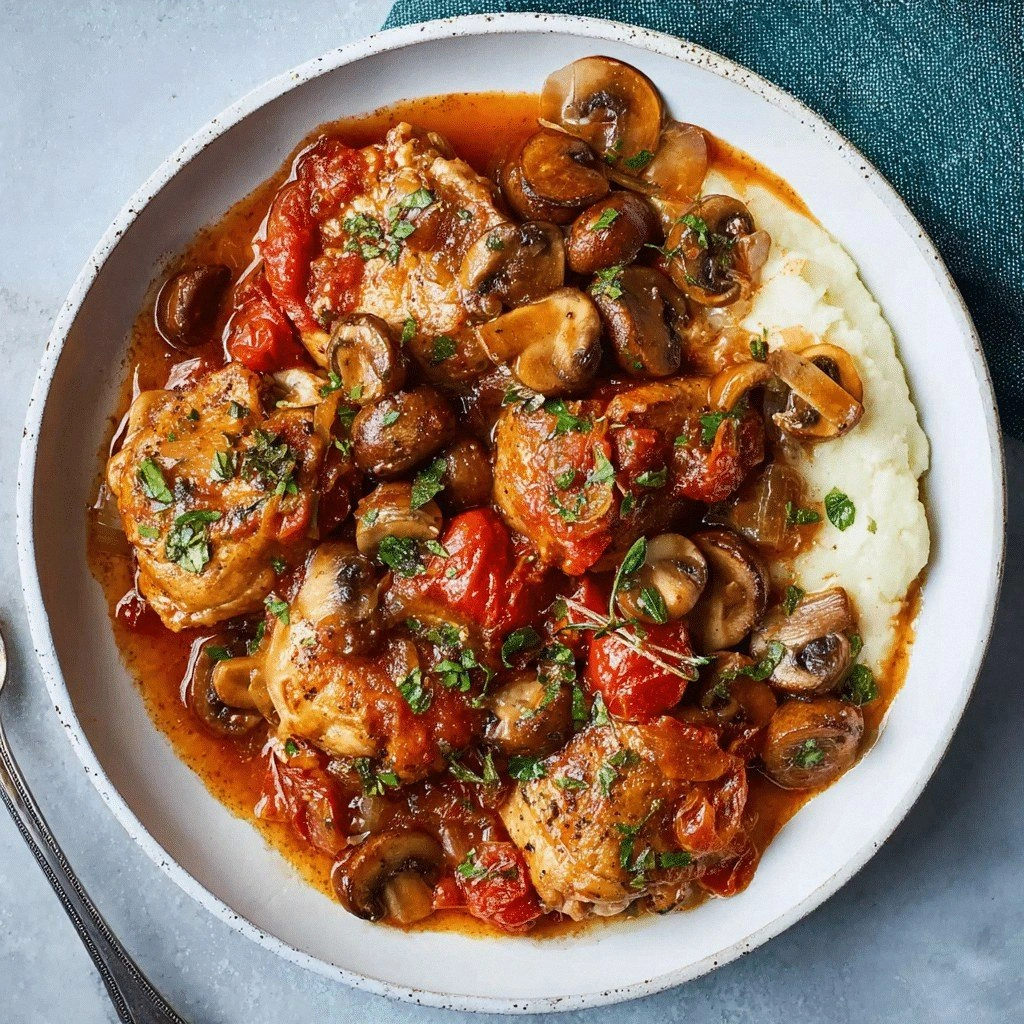
The Method — Step by Step
- Season the chicken thighs generously with salt and pepper. Let them rest while you prep the vegetables. This step builds the foundation of flavor. The meat will release a savory aroma that lingers in the air.
- In a skillet, heat the olive oil over medium‑high heat. Add the chicken thighs skin side down and sear until golden brown, about 3-4 minutes per side. The searing creates a caramelized crust that locks in juices. Watch the sizzle—it's the soundtrack of a good meal.
- Remove the chicken and set aside. In the same pan, toss the onions, carrots, celery, garlic, and mushrooms. Sauté until the vegetables soften and develop a slight caramel color, about 6-8 minutes. The mixture should smell like a comforting stew in the making.
- Deglaze the pan with white wine, scraping up any browned bits. The wine should reduce by half, concentrating its bright acidity. This reduction adds depth to the sauce and balances the richness of the butter.
- Stir in the tomato paste and diced tomatoes, then pour in the chicken broth. Bring the mixture to a simmer, allowing the flavors to meld for 5 minutes. The sauce should thicken slightly, coating the vegetables like velvet.
- Return the chicken thighs to the pot, nestling them into the sauce. Sprinkle thyme and drop the bay leaf on top. Cover and transfer to the slow cooker on low for 4 hours, or high for 2 hours. The slow cooker turns the dish into a tender, melt‑in‑your‑mouth experience.
- About 30 minutes before serving, whisk the butter into the sauce. The butter adds silky richness and a glossy sheen. Stir until fully incorporated. This step is the secret to a luxurious finish.
- Remove the bay leaf and adjust seasoning with salt and pepper. Taste the sauce; it should be balanced, with a bright tomato tang and a hint of herbaceous earthiness. The chicken should be fall‑apart tender. The sauce should cling to the meat like a silky coat.
- Garnish with fresh parsley just before serving. The parsley adds a pop of color and a fresh herbal note. Serve immediately over rice, pasta, or crusty bread. The dish pairs beautifully with a crisp white wine.
- If you’re making ahead, let the dish cool to room temperature before refrigerating. Portion into airtight containers for up to 3 days. When reheating, add a splash of water or broth to keep the sauce moist. The flavors will deepen over time, making it a great make‑a‑head option.
That's it — you did it. But hold on, I've got a few more tricks that'll take this to another level...
Insider Tricks for Flawless Results
The Temperature Rule Nobody Follows
Many slow cooker enthusiasts swear by the low setting, but the high setting actually delivers a richer, more concentrated sauce. I’ve found that starting on high for the first hour and then switching to low for the remainder yields the best texture. The quick initial simmer helps the wine reduce faster, intensifying the flavor. I’ve experimented with a 1‑hour high, 3‑hour low combo that consistently outperforms the standard 4‑hour low.
Why Your Nose Knows Best
Never rely solely on the timer; your nose is the truest judge of doneness. When the sauce smells bright, slightly sweet, and the chicken emits a savory aroma, it’s ready. The aroma is the cue that the wine has fully reduced and the tomatoes have melded. Trust your senses, and you’ll avoid the dreaded over‑cooked chicken.
The 5-Minute Rest That Changes Everything
After the slow cooker finishes, let the dish rest for 5 minutes before serving. This allows the juices to redistribute, ensuring each bite is juicy. I’ve seen dishes that rest longer, and the sauce becomes a bit watery; 5 minutes is the sweet spot. A quick rest also lets the flavors settle, making the sauce richer.
The Butter Finish That Makes It Shine
Whisking cold butter into the sauce at the last 30 minutes not only adds richness but also stabilizes the emulsion. The butter’s fat content coats the chicken, giving it a silky mouthfeel. If you’re avoiding dairy, use a plant‑based butter or a neutral oil for a similar effect. The butter finish is the final flourish that elevates the dish.
The Herb Timing Trick
Adding thyme and bay leaf too early can cause the herbs to lose their bright flavor. Add them after the initial simmer, when the sauce is already thickening. This timing preserves their aromatic qualities. I’ve found that adding them midway gives the sauce a fresh herbal lift.
The Capers That Add a Briny Punch
Capers introduce a burst of saltiness that cuts through the richness. Add them in the last 15 minutes to keep their bright flavor intact. If you’re not a fan of capers, simply leave them out; the dish remains delicious. Capers are the secret weapon for a balanced, complex taste.
Creative Twists and Variations
This recipe is a playground. Here are some of my favorite ways to switch things up:
Mediterranean Flair
Swap the white wine for a splash of dry sherry and add Kalamata olives and sun‑dried tomatoes. The olives bring a briny depth while the sun‑dried tomatoes add a sweet, chewy texture. Serve over couscous for an authentic Mediterranean touch.
Spicy Kick
Add a pinch of crushed red pepper flakes or a sliced jalapeño during the sauté phase. The heat balances the tomato’s acidity and adds a lively bite. Pair with a cool yogurt sauce to mellow the spice.
Herb‑Infused Variation
Introduce rosemary and sage along with thyme for a woodland aroma. The herbs pair beautifully with the mushrooms, creating a forest‑inspired flavor profile. Finish with a drizzle of aged balsamic for a sweet finish.
Vegan Version
Replace chicken thighs with seared tofu or tempeh, and use vegetable broth. Substitute butter with coconut oil and add nutritional yeast for a cheesy note. The dish remains hearty and satisfying, proving it’s not just for meat lovers.
Pasta Pairing
Serve the sauce over creamy fettuccine or al dente linguine for a comforting pasta dinner. The sauce clings to the noodles, creating a decadent, sauce‑drizzled experience. Sprinkle Parmesan for an extra layer of umami.
Breakfast Twist
Use the sauce as a topping for scrambled eggs or a breakfast hash. The savory tomato base complements the eggs, creating a breakfast‑for‑dinner vibe. Add a dash of hot sauce for an extra zing.
Storing and Bringing It Back to Life
Fridge Storage
Cool the dish to room temperature before placing it in an airtight container. Store in the refrigerator for up to 3 days. When reheating, add a splash of water or broth to keep the sauce moist and prevent it from drying out. The flavors will remain robust and the chicken will stay tender.
Freezer Friendly
Portion the dish into freezer‑safe containers or zip‑lock bags. Label with the date and freeze for up to 2 months. Thaw overnight in the refrigerator before reheating. The texture stays consistent, and the sauce retains its depth.
Best Reheating Method
Reheat on the stovetop over low heat, stirring occasionally. If the sauce has thickened, whisk in a tablespoon of water or broth to restore its silky consistency. Avoid microwaving, as it can cause uneven heating and a rubbery texture. Serve immediately after reheating for optimal flavor.